

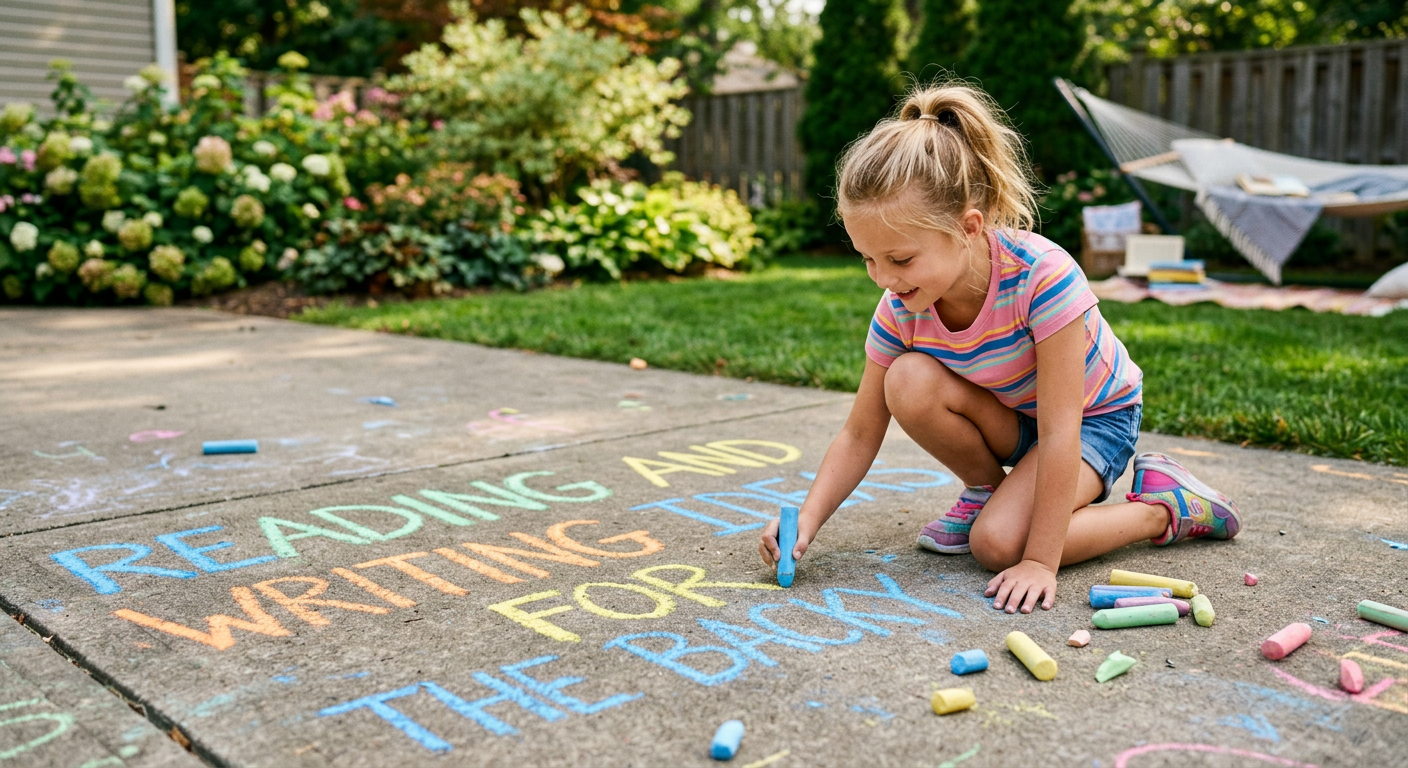
Some of the best reading and writing experiences can happen right outside in the backyard. Fresh air, sunshine, and movement help children stay engaged while building important literacy skills in playful and natural ways. Outdoor literacy activities combine learning with exploration, creativity, and fun. Whether you have a large backyard, a small patio, or a local park nearby, there are countless ways to encourage reading and writing outside.
Turn part of your backyard into a special reading area. Lay out blankets, lawn chairs, pillows, or even a small tent. Children are often more excited to read when the setting feels different and fun. Bring picture books, graphic novels, nature guides, magazines, audiobooks, and chalkboards or clipboards for writing. Reading outdoors can feel like an adventure instead of a chore!
Turn reading into a scavenger hunt by searching for words in nature and around the yard. Try challenges like: find something that starts with the letter B, look for items that rhyme, search for colors, and write them down. Find objects with short vowel sounds. Collect leaves or rocks and label them. Younger children can practice letter recognition while older children work on spelling and vocabulary.
A simple notebook can become a powerful literacy tool outdoors. Encourage children to observe the world around them and record what they notice. They can: draw and label plants or insects, write about the weather, create poems about nature, record bird sightings, and describe sounds they hear outside. Nature journals help strengthen observation, vocabulary, descriptive writing, and creativity.
Sidewalk chalk is one of the easiest ways to combine movement and learning. Writing sight words for children to jump to. Creating giant word searches. Drawing story maps. Practicing spelling words. Making alphabet hopscotch. Writing silly story starters. Outdoor writing feels less intimidating and more playful when children can erase and try again easily.
Encourage imaginative storytelling outside. Children can use sticks, rocks, flowers, or toys as story props. Building fairy houses and writing stories about the fairies who live there. Creating a dinosaur world in the dirt. Putting on puppet shows outdoors. Making treasure maps and writing clues. Acting out favorite books. Storytelling helps children organize ideas, build sequencing skills, and grow confidence with language.
Literacy does not have to feel separate from play. Reading and writing can naturally fit into outdoor activities.