

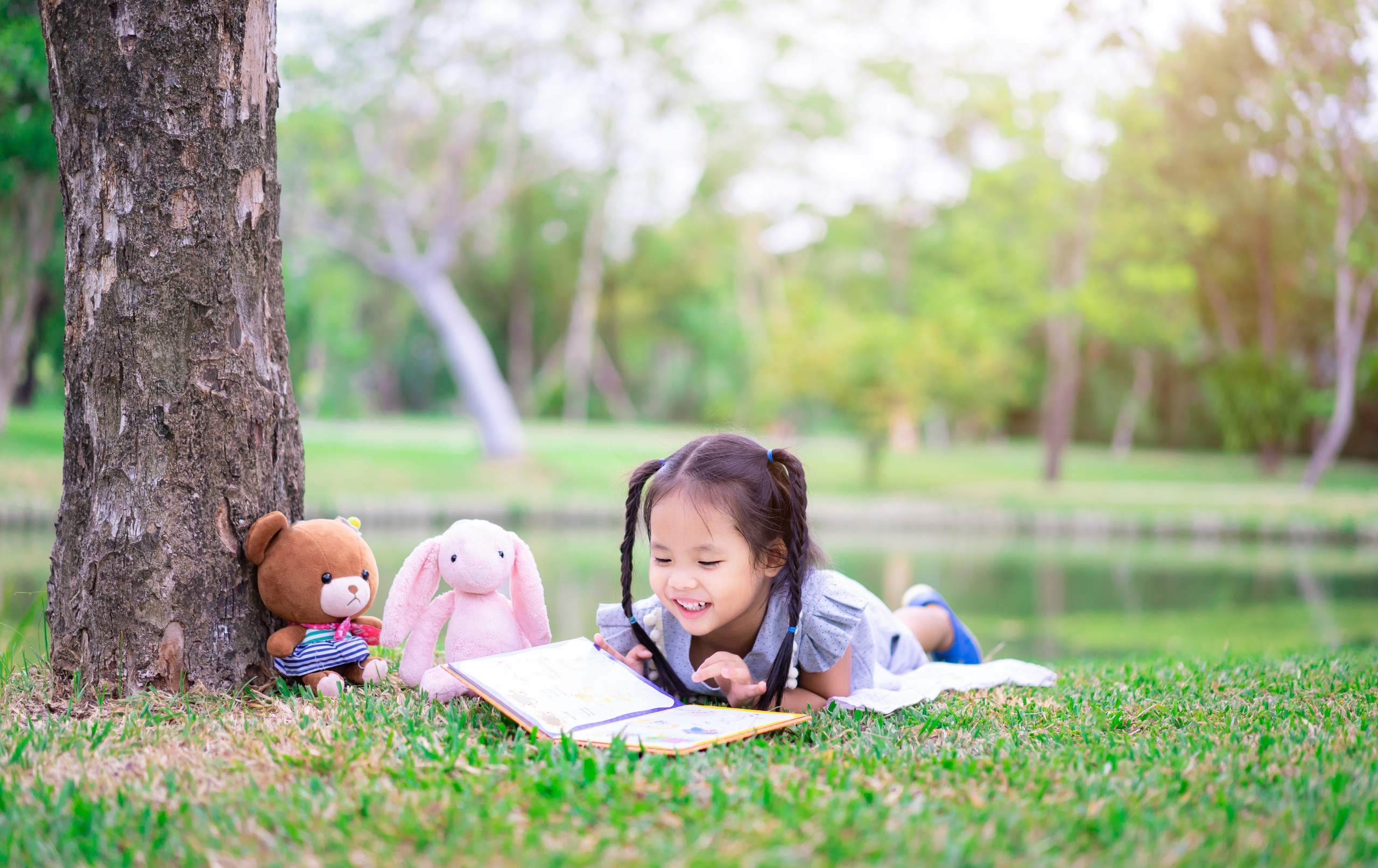
As the weather warms up, it’s the perfect time to take learning outside. While we often think of literacy as something that happens with books and pencils, some of the most powerful reading, writing, and language development actually happens outside. Nature is full of opportunities for children to observe, wonder, describe, and create—all essential building blocks for literacy.
Before children can read words, they learn to “read” their environment. A walk through the park becomes a literacy adventure when you point out signs, labels, and symbols. Stop to notice a trail marker, a playground sign, or even the labels on plants at a garden center. These small moments help children understand that print has meaning and is all around them. You can also bring books outdoors! Spread out a blanket and enjoy a story under a tree. Reading outside adds novelty and excitement, helping children associate books with positive experiences. Outdoor time naturally sparks conversation. Whether you’re watching clouds drift by or spotting a squirrel, children are eager to share what they see. These conversations build vocabulary, comprehension, and storytelling skills.
Ask open-ended questions. “What do you notice about that tree?” “Why do you think the ants are moving in a line?” “What do you think will happen next?” There’s no right or wrong answer—just an opportunity to express ideas.
Nature is a wonderful writing prompt. Encourage children to draw and label what they see: flowers, bugs, birds, or even the weather. Older children might keep a simple nature journal, writing a sentence or two about their outdoor discoveries. These playful writing experiences help children connect literacy with creativity and exploration.
Songs and rhymes come alive outside. Sing favorite fingerplays while clapping, marching, or hopping along a path. Make up silly rhymes about what you see—“I see a bee by the tree!”—to build phonological awareness, an important pre-reading skill.
Outdoor play also encourages imaginative storytelling. A stick becomes a magic wand, a pile of leaves becomes a dragon’s nest, and suddenly your child is creating characters, plots, and dialogue—all key elements of literacy development.
In our busy lives, time outside invites us to slow down. When children have space to observe, ask questions, and explore at their own pace, they build curiosity—and curiosity drives learning. You don’t need elaborate plans or materials. A short walk, a backyard picnic, or time at a local park can all become meaningful literacy experiences. Year-round, at the library, we host a nature scavenger hunt to help you explore the beauty of native plants.
This season, step outside. Read a book in the sunshine, talk about what you see, and let nature inspire your child’s imagination. You might just find that some of the best literacy moments happen outside!